Marketing vs. Communications: What’s the Difference and Why Do They Need Each Other?
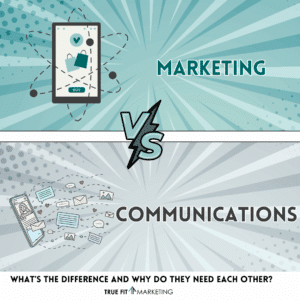
The question, “What is the difference between marketing and communications?” was posed on a social media forum. There are quite a few people on the True Fit Marketing team that have either a communications degree, a marketing degree or even both. It’s a great question and an important one for any business looking to grow strategically. While the two disciplines overlap in many ways, they serve different but complementary purposes. And when they work together seamlessly, that’s when the magic happens.
Marketing: Strategy, Positioning, and Performance
Marketing is generally viewed as the external driver of business. Typically looked at as the crazy child in the business because marketing can be super fun and off the wall, or serious as all get out and straight to the point. Basically, marketing is how you promote your products or services to your audience, with a focus on:
- Strategy: What’s the plan? Who are we targeting? How do we stand out?
- Pricing: Are we priced competitively based on the market and our goals?
- Product Positioning: How do we want customers to view what we’re offering?
- Category Definition: Where do we fit in the marketplace—and where do we want to fit?
- Analytics & Performance: What’s working, what’s not, and how do we adjust?
Marketing is about the mechanics of selling. Understanding your audience, building campaigns, and driving results. It’s proactive, fast-paced, and always evolving.
Communications: Message, Voice, and Connection
On the other side of the coin is communications which focuses more on internal alignment and the ongoing relationship your brand has with its audiences (yes, including your employees!). Communication is about:
- Brand Voice & Identity: How do we sound? What do we stand for?
- Message Development: What are we saying and why does it matter?
- Channel Selection: Are we using the right platforms to reach our people?
- Employee Communication: Is our team aligned and empowered to carry the brand forward?
- Reputation Management: How are we perceived, and how do we manage that narrative?
Communications is about clarity and consistency. It helps create trust, both inside and outside the organization.
Coexist to Function
While marketing often gets the spotlight, the reality is that neither discipline can succeed without the other. Marketing drives awareness and demand, but communications ensures the message is clear, consistent, and authentic. Communications keeps internal teams informed and aligned so marketing can be executed with confidence and intention.
Here’s how they work hand-in-hand:
- A marketing campaign might define a new target audience and run paid ads to reach them.
- Communications ensures that messaging reflects your brand voice and that internal teams know how to talk about the campaign.
Or consider a product launch:
- Marketing handles the pricing, competitive positioning, and digital strategy.
- Communications crafts the messaging, organizes press releases, and ensures your team is prepared to speak with customers and media.
The Bottom Line
At True Fit Marketing, we believe your business deserves an all-encompassing marketing solution that includes both the marketing engine and the communication framework. We don’t just help you build campaigns. We help you communicate your brand’s story in a way that resonates, inspires, and grows trust.
Because when marketing and communications are in sync, your brand doesn’t just get noticed, it gets remembered.